SM
Who We Are
WSI International, LLC is a multidisciplinary engineering firm that provides cost effective solutions to complex environmental problems. WSI provides a varied product offering for water and wastewater treatment including design/build, packaged plants, design engineering, and management. With over 35 years of direct experience in the water and wastewater treatment field, WSI personnel are dedicated to providing sound engineered solutions to clients while minimizing overall project costs and quality exceeding project expectations.
What We Do
WSI designs and manufacturers water and wastewater treatment equipment and turn-key packages for the private, municipal and industrial treatment sectors. WSI provides engineering services including design, evaluation, and project management. WSI is also active in on-site pilot testing, equipment evaluation, system audits, and technical assessments. Although the majority of WSI's products are packaged, skid-mounted systems, WSI provides custom design services at minimal additional cost.
Newest WSI Technology
Our Latest Projects
Waikoloa, Hawaii
A retrofitted plant in Hawaii
Mountain Falls Subdivision
Pahrump, Nevada
A Pumping Station Tank being lowed into
the ground outside of Pahrump, Nevada.
In Production
Eureka, CA
This plant serves a residential development, built to receive and dispose of 50,000 GPD, Title 22 Type I Reclaimed Water used for Irrigation purposes.
Military Wastewater Treatment
PH Regulating DAF
Automatic Polymer
System
COME SEE US AT
BOOTH #4653
Containerized Wastewater Plant
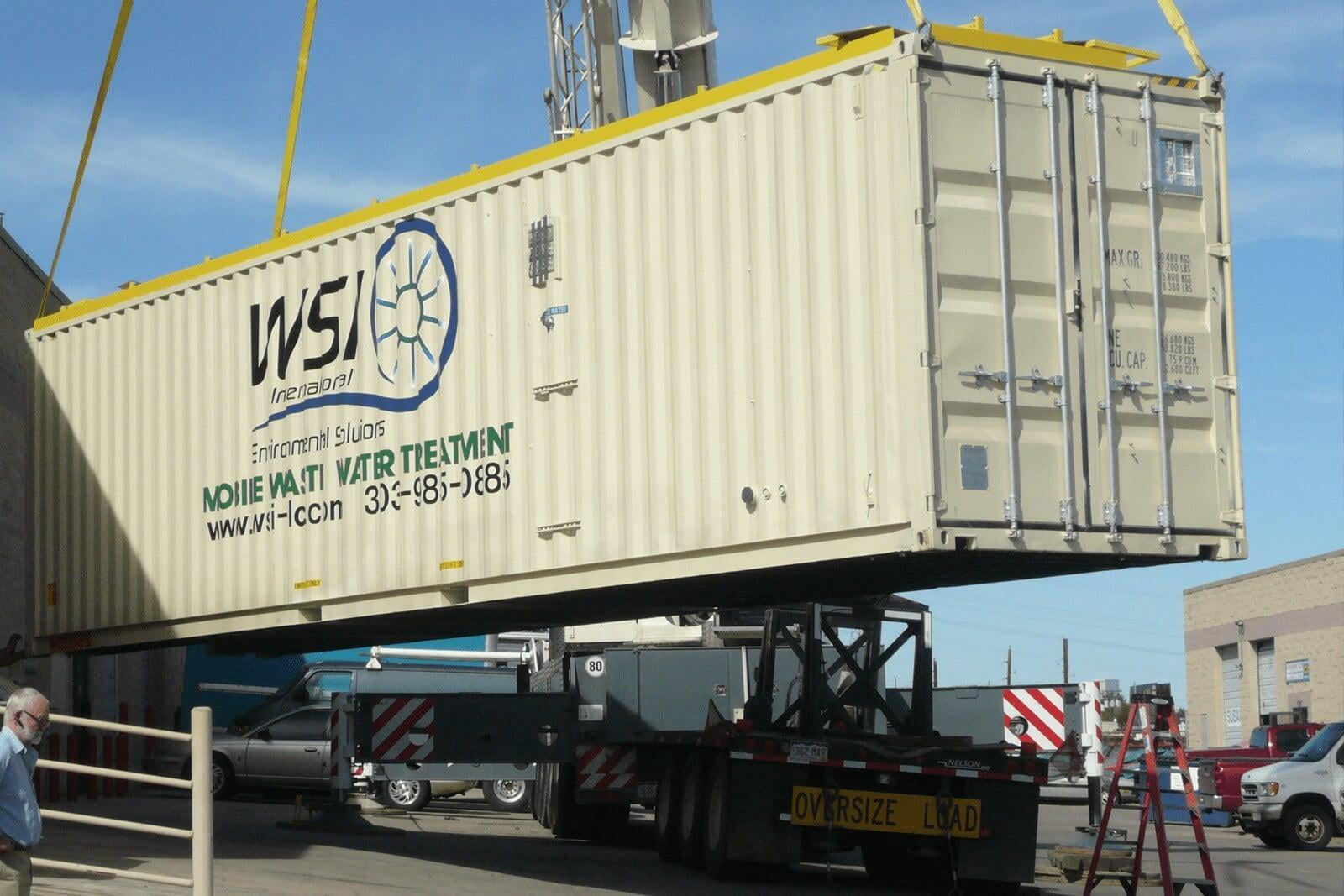
WSI's container configuration gives your plant mobility! Very limited onsite construction work needed to be up and running. These containers are shipping-worthy by land or by sea, with clean sleek lines, able to be mobile within a day to be moved to your next location.
- Going mobile will save you money by not spending unnecessary money for multiple plants
- These mobile plants can be made permanent and they are expandable
- All the features and options of a large plant in a mobile plant
- Easily loaded onto a flatbed
- Ready to ship for international shipping
- U.S. EPA Regulations and Standards are followed
Features:
- The Bio-Chip Reactor (BCR®), which is an enhanced activated sludge process.
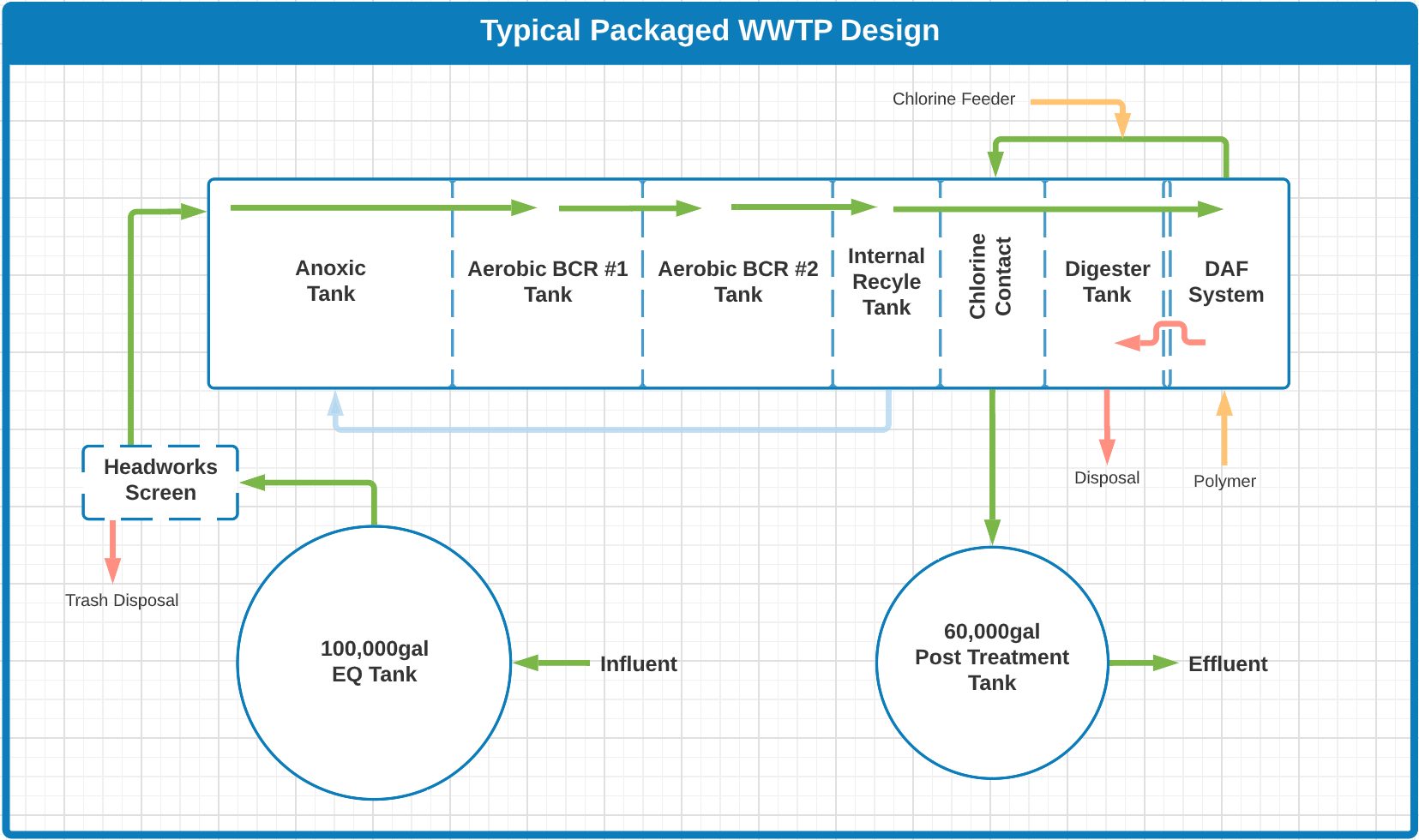
- The secondary treatment in the containers BCR® system consists of an equalization (EQ) tank, anoxic BCR, aerobic BCR, and Dissolved Air Flotation unit (DAF). With this design, the secondary treatment effluent can then meet the discharge limits of 10/10/10 mg/L (BOD5/TSS/TN).
- The tertiary treatment includes either fiber ball filters® or ultrafiltration (UF) membranes, depending upon your State/Country requirements.
- The aerobic sludge digester is included in the container plant for sludge stabilization. The digested sludge will be transferred to the local sludge disposal facilities.
- As an option, an onsite sludge dewatering box can be provided to dewater the digested sludge onsite.
5,000 - 60,000
GPD
Packaged System
WSI designs and installs packaged systems to meet any wastewater treatment requirement. Packaged systems include a DAF Unit for upfront removal of TSS, a BCR® System for removal of BOD & COD, a Solids Management program and final filtration meeting the most stringent discharge standards! These packaged systems have been created in a modular design to provide expandability, decreasing your installation costs and installation time. Systems can be configured for BOD removal, nitrification/de-nitrification, enhanced nutrient removal, and strict disinfection requirements, using California Title 22 Guidelines for reuse water.
5,000 - 300,000
Vertical Wastewater Plants
WSI has developed the ideal solution for high strength, low flow
wastes from the winery, brewery and food processing industries. The vertical plants are designed to fit a small footprint for new facilities or in plant modifications to existing facilities requiring additional treatment to meet new effluent standards.
*Bio-Chip Reactor (BCR®) enhanced activated sludge process
*Dissolved Air Flotation (DAF) solids separation
*Integrated control system
*Vessels and piping are all stainless steel (304L or optional 316L and other
grades available for specific requirements)
3,000 - 30,000
Underground Wastewater Plants
WSI's buried plants are ideal for small communities; apartment and condominium complexes where space is limited and aesthetics are a top concern. The underground plants arrive to the site fully assembled and ready for direct burial. All equipment and components are contained in the operator access hatch and completely out of view.
*All Stainless Steel construction
*Fully assembled
*Integrated Control System
*Optional traffic rated access hatches
5,000 - 50,000
Reuse / Recovery Plant
WSIs scalping plants are designed to utilize the river of water available in every city: The Sewer!
These plants are sited along sewer trunk lines and designed to draw wastewater from the sewer, treat to reuse water standards and either feed a reuse water distribution system or feed directly to major recycled water users, such as:
*Golf Courses
*Nurseries
*Vineyards
*Orchards
*Landscaping & Freeway Irrigation
*Fire Control, Suppression and Fighting
*Concrete Batching Plants
*Street Sweeping
*Cooling Systems
*Industrial Users and Industrial Cooling Applications
*Flushing toilets where approved by local codes
These systems are ecological assets to the communities they serve while providing an economical solution to Mega centralized plant expansions. The growing demand for water is driving the need to utilize every possible source, including recycled wastewater. These systems play an important role in urban infrastructure planning providing a means to produce and use recycled water locally while reducing the load on existing infrastructure and centralized wastewater plants. This significantly reduces energy and infrastructure costs. Why pump wastewater through miles of pipeline to treat at a centralized plant only to pump reclaimed water an equal distance back for utilization? Treat and Use at the Source!
Distributed water recycling plants are the future of urban water and wastewater infrastructure planning!
25,000 - 10,000,000
Design-Build Wastewater Treatment Plants
WSI has incorporated the Design-Build project delivery model into its product offerings. For the Municipality or Project Owner, this gives the peace of mind of sole source accountability. Operating under this model eliminates the need for the Owner to manage consultant engineers, general contractors, sub-contractors, equipment suppliers, start-up personnel and operators and attempt to identify and close the gaps in scope between these disciplines. WSI understands that wastewater treatment is only a small piece of your overall project. Our talented and multi-disciplined group of engineers, fabricators, project managers and start-up personnel will manage your wastewater or water reuse project from start to finish.
Wastewater Treatment Plant Renovation
Is your wastewater treatment plant nearing capacity?
Has your equipment served you well but is nearing its useful life?
Are you limited on available real estate for expansion?
Are you facing stricter effluent regulations?
WSI can help!
WSI's Bio-Chip Reactor (BCR) and Dissolved Air technology can triple the capacity of your existing activated sludge treatment process by utilizing the existing aeration basins and tankage. Utilizing the existing basins minimizes the expansion costs while closely maintaining the footprint of your plant.
Contact us today for an assessment of your plant's untapped potential.
Bio-Chip Reactor
Our Latest Renovation in Hawaii
Military Containerized Wastewater Plant
- Satellite Uplink
Made in America
Dissolved Air Flotation
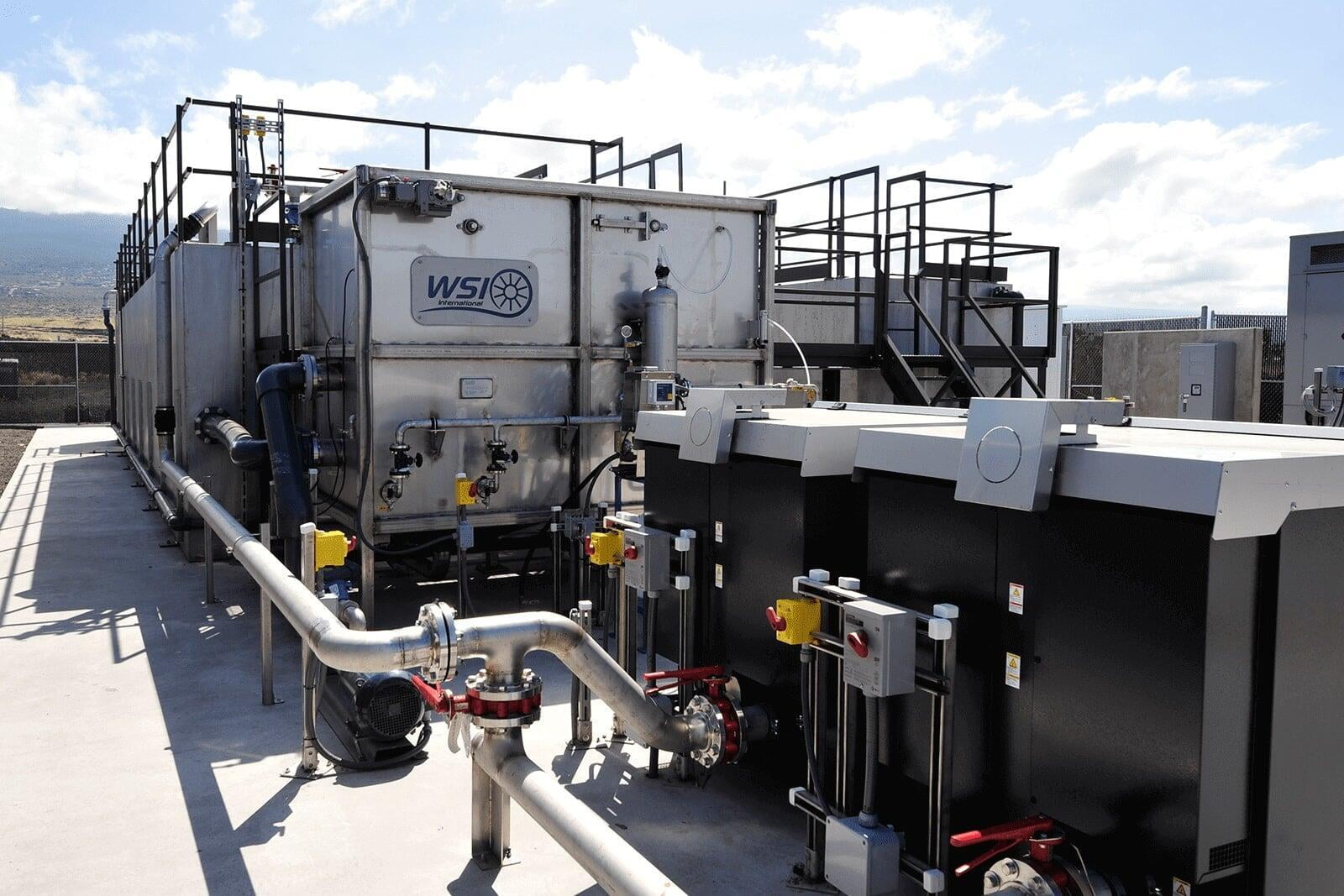
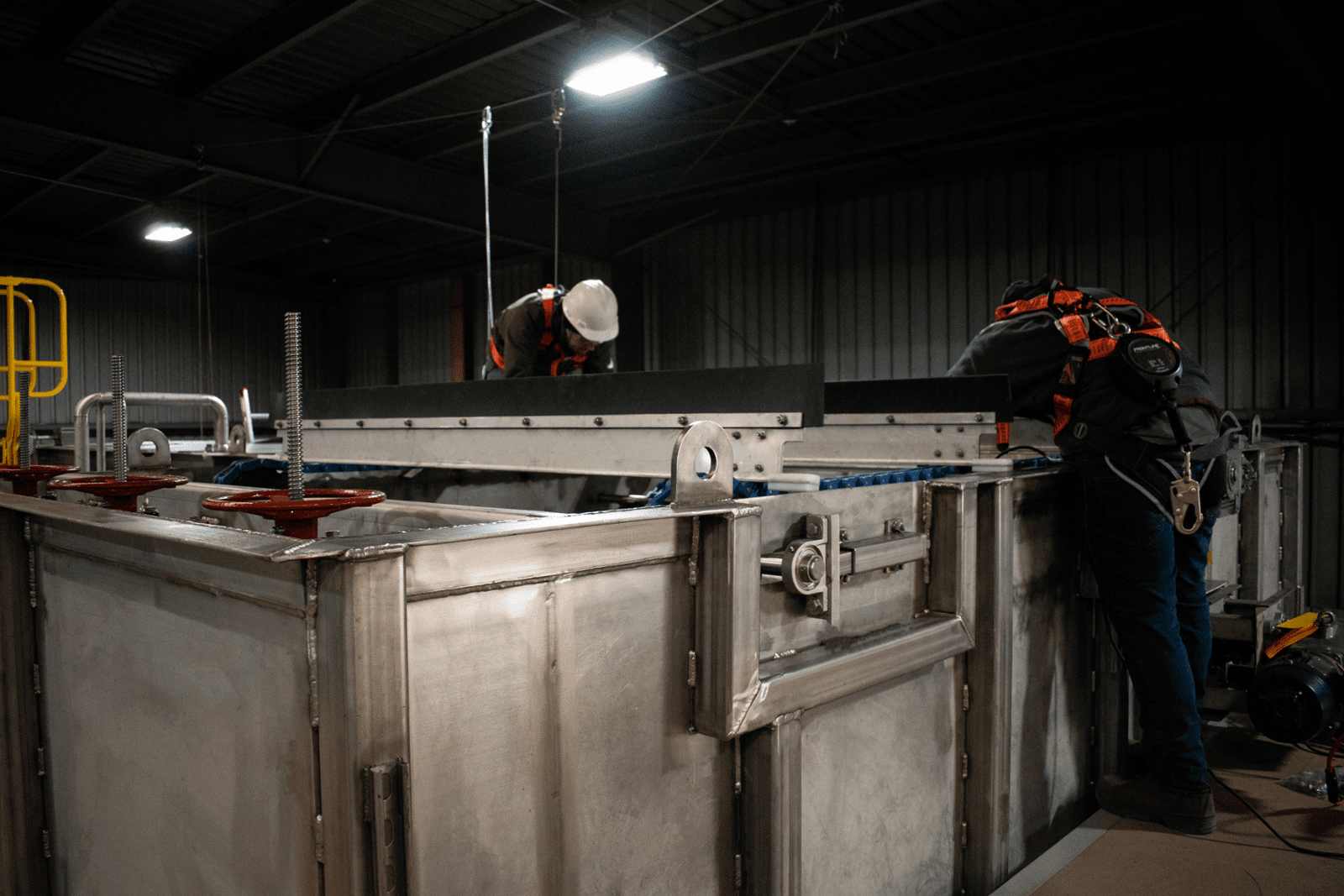
A major advantage of using a WSI DAF unit over a traditional settling clarifier is that the very small or light particles, which settle slowly by gravity, can be removed more completely and in a shorter time period while using a smaller footprint than existing settling clarifiers.
For example, the typical amount of suspended solids exiting a BCR (Bio Chip Reactor) range from 200-250mg/l TSS (Total Suspended Solids). The DAF unit, will remove these solids down to a range of 10mg/l TSS prior to final filtration. A percentage of the clean water coming from the front of the DAF unit is re-circulated and pressurized while adding dissolved oxygen and then discharging to a manifold located on the bottom of each DAF unit.
Such a design completely eliminates the concerns of sludge bulking problems that may happen in a secondary clarifier for both the suspended growth process and the attached growth system.
Compared to other older technologies, still being used today, the DAF unit is a very simple and efficient process.
WSI will design a DAF for almost any application ranging in sizes from 50 GPM to several thousand GPM meeting the most demanding requirements.
Give us a call and we can design just the right DAF for your project!
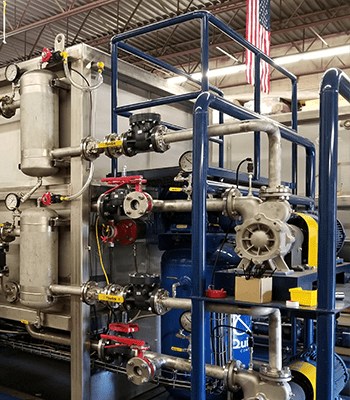
Automatic Polymer System
A feed pump is supplied to inject the polymer solution into the DAF unit. A polymer preparation system is used to fully hydrate or uncoil the polymer molecule in order to expose the maximum number of charge sites to the treatment process. The process of the polymer activation and blending system is to gently and thoroughly activate the polymer without damaging the fragile molecular chain. The polymer system is comprised of a neat polymer dispensing system, dilution, mixing, aging and solution injection systems The polymer system is designed to inject the 0.1% polymer solution at a dosage of 5 ppm.
Maintaining a uniform shear field of energy is vitally important to the polymer activation process. This polymer system is designed to apply the ultra-high mixing energy at the point of initial polymer and water contact to prevent the polymer from gelling or agglomeration. The non-mechanical high hydrodynamic shear energy which disperses the polymer into small particles is created by using a mixing educator.
The high velocity jet stream produces a strong suction in the mixing chamber of the mixing educator causing the neat polymer to be drawn through the suction port into the mixing chamber. The well mixed polymer is diffused into the aging tank. A pump is provided to recirculate the polymer in the aging tank and will switch to pump the well blended polymer to the polymer solution tank when the level drops in the solution tank. Polymer addition to the DAF unit is utilized to enhance the solids separation effectiveness.
Your polymer system will be sized to meet your plants process requirements.
Fiber Ball Filter
The fiber ball filter uses a highly porous synthetic material as the filter media. The fiber ball is made of terylene fiber and measures about 1 inch in diameter. The porosity of the fiber ball is 96% and the packing density is 0.77-1.03 lb/ft3.
During filtration, the fiber ball media layer exhibits the ideal straight "V" distribution with the help of gravity compression. The lower media layer is denser than the upper media layer. This kind of media layer configuration allows deeper penetration of the solid particles in the media layer and also produces better quality filtered effluent.
The advantages of fiber ball filter include:
1. High filtration rate
2. Better filtered effluent quality
3. More solid retaining capacity
4. More production rate per filtration cycle
5. Less backwash water usage
The fiber ball filter is ideal for applications such as:
* Wastewater reuse
* Tertiary treatment of industrial wastewater
* Injection water treatment for oil fields
* Make-up water treatment for boilers
* Recycling water for swimming pools
* Pretreatment for UF and RO membranes feed
These units are typically used as pre-treatment before a belt press or centrifuge, or to reduce disposal volume.
Gravity Thickener
WSI gravity thickening units provide continuous dewatering of various types of waste sludges by gravity drainage through a porous synthetic membrane, (belt). The belt is supported by a series of perforated foils.
Rotary Thickener
WSI's rotary thickening units consist of one or more stainless steel baskets, (or cells) in the shape of two truncated cones set base to base. Stainless steel screen or synthetic mesh is firmly affixed to the baskets providing the dewatering surface. The baskets are driven by a single variable speed drive assembly with sludge flow controlled by the use of sensors and a small PLC.
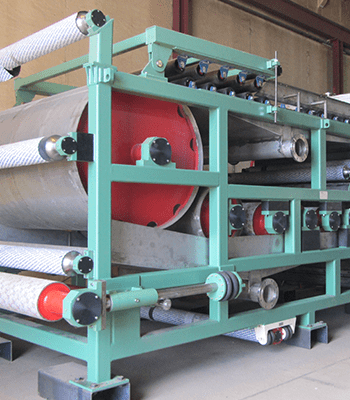
Twin Wire Press/Sludge Presse
'Water is removed from the incoming sludge by being "pressed out" under the influence of pressure. Typically, a wire mesh belt is used to allow the gravity flow of water out of the sludge while also providing structural strength. The system is designed so that the wire mesh belts converge in a wedge-shaped configuration to squeeze the bulk of the water from the sludge. The belts continue in an S-shaped flow path through rollers to further compress and dewater the sludge. WSI manufactures presses up to 3.5 meters in width.
Key Benefits of our BCR Technology
*Triple Capacity of Existing plants
*Minimize Expansion Costs
*Stable Operation
*Increased Bio-Growth
WSI's team of engineers has the knowledge and expertise to effectively carry out a broad spectrum of environmental projects. As part of our product package, WSI provides complete design and engineering services. Depending on project requirements, WSI can create custom packages, pre-built or installed on site, retrofit existing facilities, perform installation and start-up services, provide operational training and/or staffing, and develop residual waste management solutions.
WSI is committed to providing comprehensive evaluations of existing facilities and developing cost-effective, highly efficient solutions to meet stringent discharge requirements, increase plant capacity, decrease operational costs, and increase overall performance.
WSI provides the following services:
Process Design and Evaluation
Turn-Key Systems
Residual Waste Management Plans
Detailed Facility Layout Drawings
Piping and Electrical Diagrams
Process and Instrumentation Diagrams
Construction Drawings
Sludge Composting
Economic Evaluations
Facility Layout
Hydraulic Profiling
Process Simulation
Project Management
Hawaii
Costa Rica
Nevada
Papagayo, Costa Rica
Due to rapid growth of the resort, a 500,000 gpd wastewater treatment facility was required to meet the construction schedule. This system was designed, fabricated and installed in only 4 months.
This modular, packaged system includes: flow equalization, SBR treatment, clean water storage and disinfection, as well as an aerobic sludge digester.
Seascape, Hawaii
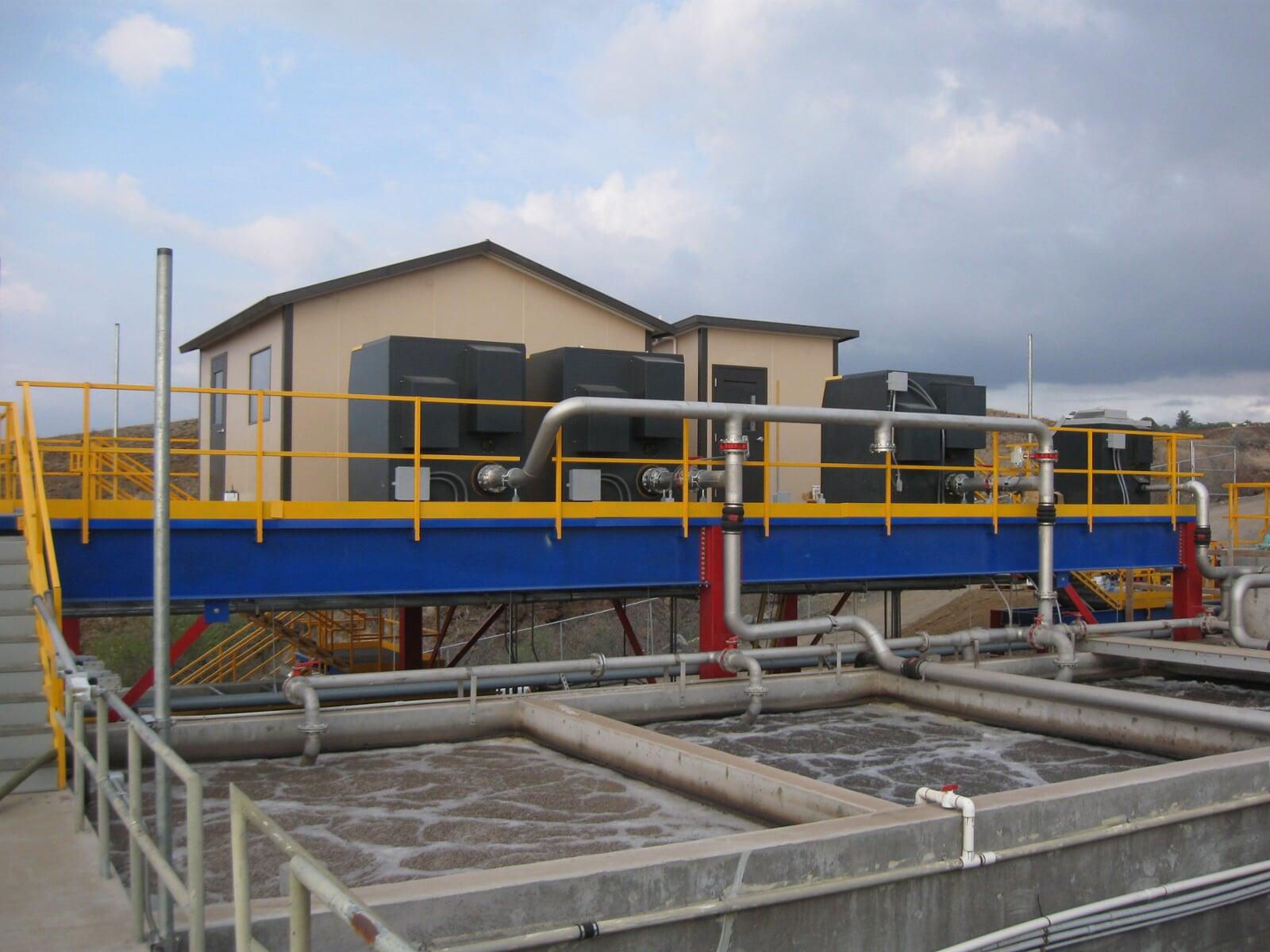
The second phase expansion of the Seascape Development WWTP was completed in September, 2008. The plant features below grade Bio-Chip Reactor tanks and recessed Dissolved Air Flotation Cells to maintain the ocean views. The current capacity of the plant is 180,000 GPD. The third phase will expand the plant capacity to 250,000 GPD.
The Second Phase Expansion of the Waikoloa Village Wastewater Treatment Plant was completed in March, 2010. The project is composed of three phases, converting an existing Intermittent Cycle Extended Aeration Plant (ICEAS) plant with a rated capacity of 300,000 GPD to a Bio-Chip Reactor Plant with a rated capacity of 800,000 GPD. The system utilized the existing reactor tanks for the new Bio-Chip Reactor and included the addition of two DAFs, Influent Screening, grit removal, control systems, stand-by power generator, two digester tanks and centrifuge dewatering.
The retrofit has been installed in multiple phases to allow uninterrupted treatment of the existing wastewater flows. When the third phase is completed, the treatment capacity will be nearly 3 times the existing plant capacity, produce a higher quality effluent and occupy nearly the same footprint.
This project demonstrates WSIs ability to work with existing conditions and provide a cost savings solution utilizing existing infrastructure.
WSI managed the design and installation of a lift station being built for the Mountain Falls subdivision in Pahrump, Nevada. Ultimately, the Jane Avenue Lift Station will help transport wastewater for the development that will include 4,200 single-family homes, a day care center, a water park, a large recreational gymnasium, a casino and a church.
Ka'upulehu, Hawaii
The Kaupulehu WWTP was a fast track project that was designed, permitted, built, and started-up in 90 days. This plant was sized to meet the front end wastewater requirements of a new development. When the development expands a larger wastewater treatment plant will be installed. This skid mounted treatment plant can then be mobilized to another site or facility requiring immediate wastewater treatment.
Headquarters:
Corporate Headquarters
Alfred Tyler 2 - CEO
Ken Binnix - COO
51 Franklin St., Suite 301
Annapolis, MD 21401
Phone: 443-320-0211
Fax: 410-269-1656
Engineering Division
Mike Fields - Chief Engineer
6424 South Quebec Street
Centennial, CO 80111
Phone: 303-985-0885
Fax: 303-985-3253
Domestic Representatives:
Califormia / Nevada
Carl Petty
Environmental Water Solutions, Inc.
Phone: 562-941-6095
Email: cpetty_ewsinc.org
Colorado / Wyoming / Montana
Walter F. "Buddy" Alford - ICS Sales
P.O. Box 350188
Westminster, CO 80035-0188
Phone: 303-635-9888
Fax: 303-635-0392
Email: icssales_msn.com
Poe Tyler
111 Hekili St. Suite A#161
Kailua, HI 96734
Phone: 808-217-8484
Fax: 800-604-1868
Email: ptyler_wsi-llc.com
Maui
Craig Smith
Phone: 808-280-5208
Fax: 808-573-1289
Email: csmith_wsi-llc.com
Mid-Atlantic
Lonnie Heflin
51 Franklin Street Suite 301
Texas
Bob J. Johnson & Associates
16420 W. Hardy Road Suite 100
Houston, Texas 77060
Phone: (281) 873-5555
Fax: (281) 873-5544
International Representatives:
China / Korea
John Baik
Cleantech Corporation
203-602, Hyundai Pine Village, 32-11, Sanghyundong, Yonginsi, Korea
Phone: 82-18-563-0339
Fax: 82-31-265-4318
Costa Rica : San José
Edgar Gonzalez
Phone: 011-506-22534778
Fax: 011-506-22835167
Email: egonzalez_wsi-llc.com
Costa Rica : Liberia
Phone: 011-506-26656321
Fax: 011-506-26655300
Turks & Caicos Islands, Dominican Republic, and Haiti
Jeffery A. Lee
Phone: 649-231-1078
Email: jlee_leeastwoodarch.com
nd
WSI International :: 2010 All Rights Reserved :: Tel 303-985-0885